
Could Somatic Wearables Be the Next Tool in Nervous System Regulation?
What Polyvagal Theory, wearable technology, and nervous system retraining might tell us about getting support when our own regulation tools aren't quite enough
By Sogol Johnson, MA, ACC | Founder of Cycle Breakers Lab & Creator of the Mental Mastery Protocol™
I spent nearly two decades working in technology, behavioral research, human-centered design, and strategy, so perhaps it was inevitable that my previous world and my current work would eventually find their way back to each other. Lately, I've been thinking about one particular intersection: somatic wearables. Not another watch that tells us we're stressed, because most of us don't need a dashboard to confirm what our bodies are already making painfully obvious. I'm much more interested in whether technology could actually respond to the body in the moment it begins moving into a stress response.
Could a wearable provide rhythmic vibration, pressure, temperature changes, breath pacing, or another form of sensory input when it recognizes that our physiology is shifting? More importantly, could that input become a temporary cue that helps us find our way back to ourselves before anxiety, overwhelm, anger, panic, or shutdown completely takes over?
This question is personal for me, too. I have struggled with panic attacks on airplanes, and if you've ever experienced panic in a place where you can't simply leave, you know how different "regulation" feels in theory versus in the moment. I can understand exactly what my nervous system is doing. I can know that the sensations are part of a stress response, remind myself that I am safe, and have an entire toolbox of somatic and nervous system regulation practices available to me. But when you're 35,000 feet in the air and your body has decided there is danger, intellectual understanding can suddenly feel very far away.
Those are the moments that make me curious about technology. Not necessarily something I would wear every day to regulate me, but something that could meet me in the narrow window when my nervous system is escalating and I am having difficulty accessing the tools I already know. A subtle rhythmic vibration, pressure, breath cue, or other familiar sensory signal might provide enough of an interruption to remind my body of a pathway I've practiced before. It wouldn't need to stop the panic for me. It might simply help me find my way back to the skills that become harder to access once the panic response has taken over.
I'm skeptical. I'm also hopeful. Those two things don't have to contradict each other.
The possibility becomes especially interesting when we look at it through the lens of Polyvagal Theory and what we're learning about nervous system regulation. I can imagine somatic technology being useful during the early stages of learning regulation, particularly when someone understands intellectually what they're supposed to do but can't access those tools once they're activated. What I don't want is another device we become convinced we cannot function without. If technology is going to support nervous system regulation, I think the ultimate measure of success should be whether we eventually become less dependent on it.
We've Become Very Good at Measuring Stress
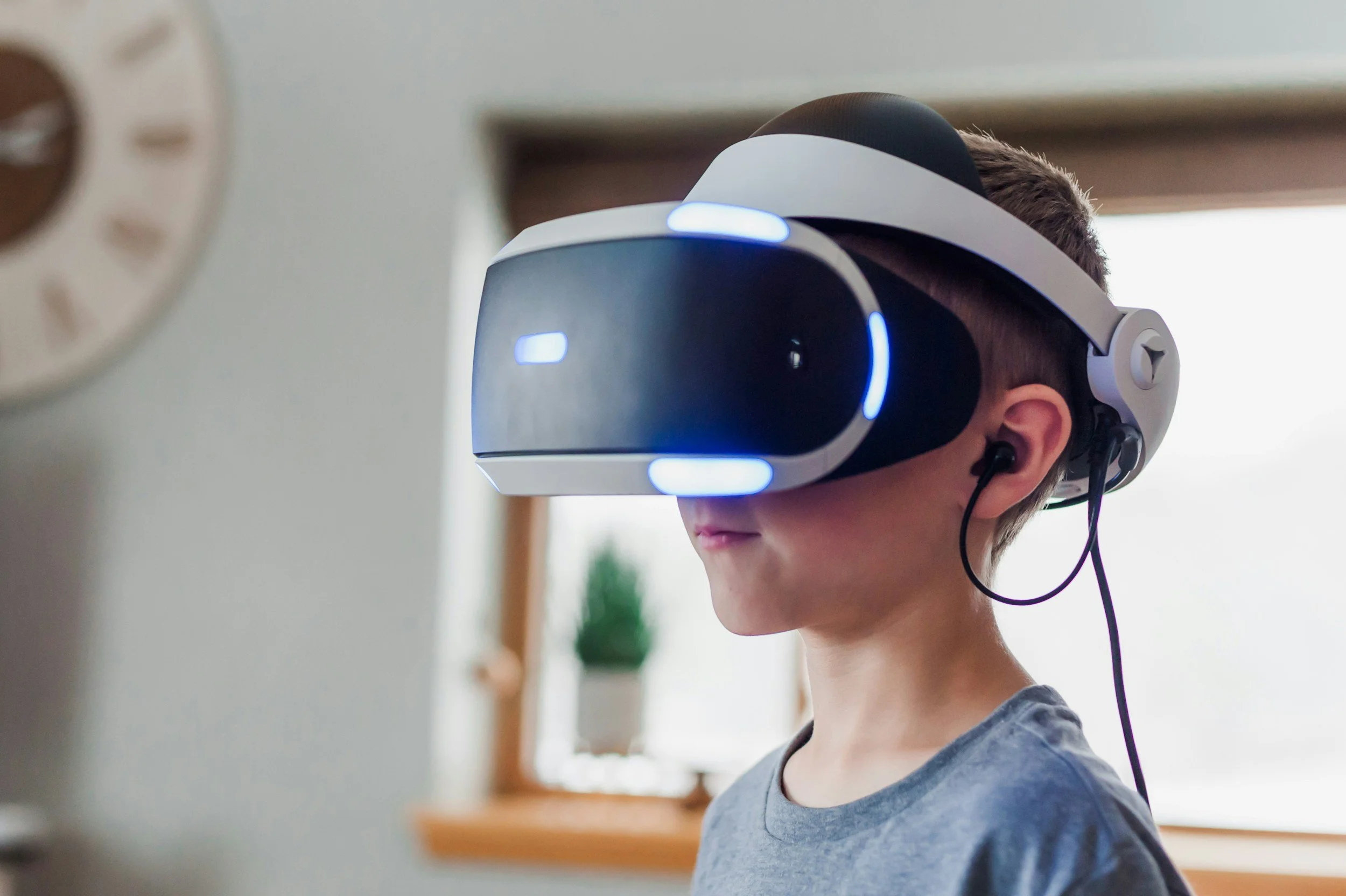
Sensory Wearables
Wearable technology can already tell us an extraordinary amount about our physiology. Depending on the device, we can monitor heart rate, heart rate variability, respiration, sleep, movement, temperature, blood oxygen, and various estimates of stress and recovery. We've essentially created increasingly sophisticated dashboards for the human body.
What we've been slower to develop is technology that helps us understand what to do with that information.
Knowing that your heart rate has increased or your HRV has changed doesn't necessarily help when you're sitting in a difficult meeting, boarding an airplane, navigating conflict with someone you love, or simply feeling your body begin to move toward panic. In some cases, receiving another notification telling you that your body is stressed might even make things worse. For someone already prone to hypervigilance, constantly monitoring physiological data can easily become another thing to worry about.
This is why I'm much more interested in the shift from tracking to assisting. Instead of simply reporting that something has changed, what if technology could provide a subtle sensory cue that you've already practiced associating with regulation? Perhaps a slow rhythmic vibration begins at your wrist. Maybe the device provides a gentle breathing rhythm or another predictable sensory pattern. The purpose wouldn't be to make the stress disappear. It would be to interrupt the automatic pattern long enough for you to notice what is happening and choose what comes next.
That is a much more interesting design problem.
Why Polyvagal Theory Makes This Particularly Interesting
Polyvagal Theory, developed by neuroscientist Stephen Porges, has become influential in trauma-informed and somatic approaches to understanding autonomic regulation. Some of the theory's specific physiological claims remain debated within the scientific community, so I don't think it should be presented as though every element is settled neuroscience. What I do find useful is the broader framework it gives us for thinking about how the nervous system responds to perceived safety, threat, connection, and disconnection.
One concept associated with Polyvagal Theory is neuroception, the idea that our nervous system is continually evaluating information from the environment, relationships, and body without requiring conscious thought. In practical terms, our body may begin responding to something before our logical mind has completely understood what is happening. Our heart rate changes, breathing becomes shallower, muscles tighten, attention narrows, and suddenly we feel an urge to defend ourselves, leave, appease someone, or withdraw.
This is something I see as particularly relevant for high-functioning people. We often assume that because we intellectually understand a situation, our body should automatically follow. We know the presentation isn't dangerous. We know the difficult conversation isn't a physical threat. I can know that the airplane I'm sitting on is statistically a safe form of transportation. Yet our physiology may be behaving as though something urgent is happening.
That's because regulation isn't purely a cognitive process.
We can tell ourselves we're safe repeatedly and still feel our chest tightening. We can understand exactly where an old behavioral pattern came from and still find ourselves repeating it. We can spend years developing insight and then wonder why our body seems to be operating according to an entirely different set of instructions.
This is one of the reasons I've become so interested in the intersection between behavioral research, nervous system regulation, IFS and somatic work. Sometimes the problem isn't a lack of understanding. Sometimes the body hasn't yet had enough new experiences to update what it expects.
The Nervous System Learns Through Experience
Think about what humans instinctively do when comforting a distressed child. We don't usually sit beside them and present a logical argument about why they shouldn't be upset. We soften our voice. We hold them. We rock them. We rub their back. We slow our movements. We create rhythm and predictability. We provide warmth, proximity, and connection.
These are sensory experiences.
Adults aren't children, of course, and nervous system regulation is far more complex than simply reproducing comforting sensations. But there is something important here. The body receives information through far more than language, and sometimes changing the sensory experience can help change what happens next.
This is where the idea of a somatic wearable begins to make sense to me. If rhythmic movement, predictable sensory input, breath pacing, pressure, temperature, sound, or other forms of stimulation can influence how we experience our bodies, perhaps carefully designed technology could provide an external cue that helps us access regulation when our internal tools aren't readily available.
Not because the wearable creates safety, but because it reminds us of a pathway we've already practiced.
Regulation Is Hardest When You Actually Need It
This is the part that often gets lost in conversations about nervous system regulation. Practicing a breathing technique while you're sitting comfortably at home is very different from remembering that technique when you're three minutes into a panic response, fighting with your partner, overwhelmed at work, or sitting on an airplane knowing that you can't simply step outside and regroup.
Once the nervous system becomes strongly activated, access to our usual cognitive resources can become more difficult. The very moment we need our regulation tools is often the moment they become hardest to remember or use effectively.
I've experienced this contradiction myself while flying. I can know the tools. I can understand the physiology. I can recognize that my nervous system is responding to perceived danger rather than immediate physical danger, and still experience the very real sensations of panic. Knowledge doesn't automatically override physiology.
This is especially relevant when someone is just beginning nervous system work. You're essentially trying to introduce a new response while your body is automatically running a familiar one. The old pathway has been practiced hundreds or thousands of times. The new one may have been practiced for two weeks.
That's where I think assistive technology could be genuinely valuable.
Imagine that you've practiced regulating while receiving a particular slow haptic rhythm from a wearable. Over time, that rhythm becomes familiar. Then you're sitting in a difficult meeting, experiencing turbulence on a flight, or feeling anxiety escalating in a crowded environment, and the same sensory pattern begins. Ideally, it doesn't regulate you for you. Instead, it gives you enough of a cue to recognize, "My system is becoming activated. I know this pattern. I know what I can do next."
That distinction is important.
Where My Skepticism Begins
We already outsource an enormous amount of our lives to technology. Our phones remember numbers, navigate cities, manage calendars, entertain us, track our sleep, count our steps, tell us when to stand, remind us to breathe, and increasingly tell us how well our bodies have recovered.
I'm not convinced the answer to nervous system dysregulation is another device we become afraid to leave home without.
The airplane example makes this concern particularly clear to me. If a wearable helps me regulate during a flight today, that's potentially useful. If six months later I believe I cannot get on an airplane without it, something else has happened. Instead of increasing my confidence in my ability to navigate activation, the technology may have become another condition my nervous system believes it needs in order to feel safe.
If someone eventually believes, "I can't regulate unless I'm wearing this," we've potentially replaced one problem with another. The device may have helped reduce distress in the short term while inadvertently weakening confidence in the person's own ability to navigate activation.
That isn't what I want nervous system work to accomplish.
Through Cycle Breakers Lab and the Mental Mastery Protocol™, my interest is in helping people become increasingly capable of recognizing their own patterns, understanding what those patterns are trying to accomplish, experimenting with different responses, and developing greater flexibility over time. Regulation isn't about creating a life in which nothing activates us. It's about becoming better at recognizing activation and finding our way through it without automatically handing control over to old survival responses.
Technology should support that process rather than become the process itself.
Maybe We Should Think of Somatic Wearables as Training Wheels
This is where my skepticism and optimism meet.
Perhaps somatic wearables shouldn't be designed as permanent regulation devices at all. Maybe they should function more like training wheels for the nervous system, providing additional support while someone is learning a skill and gradually becoming less necessary as that skill develops.
You can also explore Cycle Breakers Lab’s nervous system regulation tools.
For someone who has spent years in chronic stress or survival mode, regulation itself can initially feel unfamiliar. Calm isn't always experienced as comfortable simply because it's calm. If your body has become accustomed to vigilance, slowing down can sometimes feel strange, vulnerable, or even unsettling. Developing a different relationship with those states takes time and repetition.
An external sensory cue could potentially help create repeated experiences of moving from activation toward greater regulation. Over time, the person begins recognizing the transition without needing as much external support. They become more aware of the early sensations of activation, more familiar with what helps, and more confident that they can tolerate the experience without immediately reacting to it.
The progression I'm interested in isn't wearable equals regulation. It's external support → repeated experience → increased awareness → internal capacity → reduced reliance on external support.
That final step matters enormously to me. I would actually want a successful somatic wearable to eventually become less important in someone's life.
This Is Also How I Think About the Mental Mastery Protocol
The philosophy behind the Mental Mastery Protocol™ is not that we should immediately eliminate uncomfortable reactions. I think we often move too quickly toward fixing ourselves before we've actually understood what's happening.
Instead, we become researchers of our patterns.
What happened immediately before the reaction? What changed in the body? What emotion appeared? What did I automatically want to do? What did that response seem to be protecting me from? What happened when I tried something different? What helped me return?
This is where my old life in behavioral research and my current work in nervous system regulation continue to overlap. Behavior is information. Patterns are information. Activation is information. Rather than immediately judging what happens inside us, we can observe it, form hypotheses, experiment with different responses, and notice what changes.
A wearable could potentially become another instrument in that laboratory.
Maybe rhythmic stimulation helps one person. Maybe movement helps another. Maybe visual orientation, breath pacing, pressure, warmth, music, or connection works better for someone else. The point isn't to discover the universal regulation technique. The point is to understand your own system well enough that you have options when activation arrives.
What I Would Want From a Somatic Wearable
Interestingly, I don't think the best somatic wearable would necessarily be the one with the most technology. I would want something quiet, discreet, customizable, and intentionally designed not to make people obsess over their physiological state.
This matters because constant monitoring isn't automatically regulating. For someone prone to anxiety or hypervigilance, watching every fluctuation in heart rate or HRV could potentially reinforce the belief that bodily changes are dangerous. The technology would need to help people develop curiosity about physiological changes rather than fear of them.
There's a meaningful difference between thinking, My stress score is rising. Something is wrong, and thinking, Interesting. My nervous system is becoming activated. Let me notice what it needs.
The second response creates space, and sometimes that little bit of space is where behavior change begins.
Technology Cannot Manufacture Human Safety
There is another limitation that shouldn't be overlooked, particularly when discussing this through a polyvagal-informed lens. Some of our most powerful experiences of regulation happen in relationship with other people. A warm voice, genuine eye contact, laughter, being understood, sitting beside someone we trust, feeling welcomed rather than judged, or simply knowing that we don't have to manage something alone can change our physiological experience in ways that are difficult to reduce to a vibration pattern.
A device cannot recreate human connection, nor should we ask it to.
If somatic wearables have a meaningful future, I don't think it lies in replacing therapy, co-regulation, relationships, movement, nature, touch, or the many other experiences through which humans find regulation. Their value may instead exist in the spaces between those things, particularly when support isn't immediately available and someone needs help interrupting an automatic response.
Technology doesn't have to replace human regulation to be useful. Sometimes assistive technology only needs to help us find the door.
Could Wearables Actually Help With Nervous System Rewiring?
This is ultimately the question that interests me more than whether a wearable can make someone feel calmer.
Can it help someone practice a different response often enough that the response gradually becomes easier to access without the device?
We know that repeated experience plays an important role in learning and neuroplasticity. If a person repeatedly notices activation, interrupts an automatic response, engages in regulation, and experiences themselves returning to a more manageable state, they're accumulating evidence that activation doesn't always have to end the way it historically has.
That evidence matters because the body begins learning something new. Maybe I can feel this sensation without panicking. Maybe I can experience conflict without immediately shutting down. Maybe I can notice anxiety without rearranging my entire life around avoiding it. Maybe I can become activated and still come back.
For me, this is particularly meaningful in the context of flying. The goal wouldn't be to have technology convince me that airplanes are safe. My rational brain already knows that. The goal would be to accumulate new embodied experiences of feeling activation on an airplane, staying with it, regulating through it, and eventually discovering that my body can experience those sensations without needing to escape.
If technology can help facilitate those experiences in the beginning, particularly during the difficult transition between intellectual understanding and embodied practice, I think it deserves serious exploration.
But I'd still want the eventual goal to be independence.
Where I Land
I'm cautiously optimistic about somatic wearables precisely because I don't think they should become the answer to nervous system regulation.
I don't believe a device can heal trauma. I don't believe vibration automatically communicates safety to every nervous system. I don't believe technology should replace therapy, relationships, somatic practice, IFS, professional support, or the slow work of understanding why our protective patterns developed in the first place.
What I do believe is that there's an interesting gap between understanding regulation and being able to access it when we need it. That's the gap I've personally experienced at 35,000 feet, knowing what my nervous system is doing and still wishing I had something that could help me access what I already know.
That gap is where assistive technology might have something meaningful to offer. A cue, a pattern interruption, a reminder to come back into the body, or simply a little additional support while we're building a pathway that isn't automatic yet.
As someone who spent nearly two decades studying human behavior through technology, research, and design and now spends my work studying the systems within us, I find this intersection fascinating. Maybe the next meaningful evolution in wellness technology isn't another device collecting increasingly detailed information about our bodies.
Maybe it's technology designed to help us understand and work with our bodies well enough that, eventually, we don't need the technology quite so much.
That's a piece of technology I'd be interested in designing.
Related reading: Learn more about the signs of a dysregulated nervous system.
About Sogol Johnson
Sogol Johnson, MA, ACC, is the founder of Cycle Breakers Lab and creator of the Mental Mastery Protocol™. She is a Certified IFS Somatic Practitioner, trauma-informed coach, nervous system educator, researcher, and behavioral science professional. Her work brings together behavioral research, nervous system regulation, somatic practices, IFS, and human-centered thinking to help people understand and change patterns that can keep them operating in survival mode.
