
The Invisible Load We're Carrying
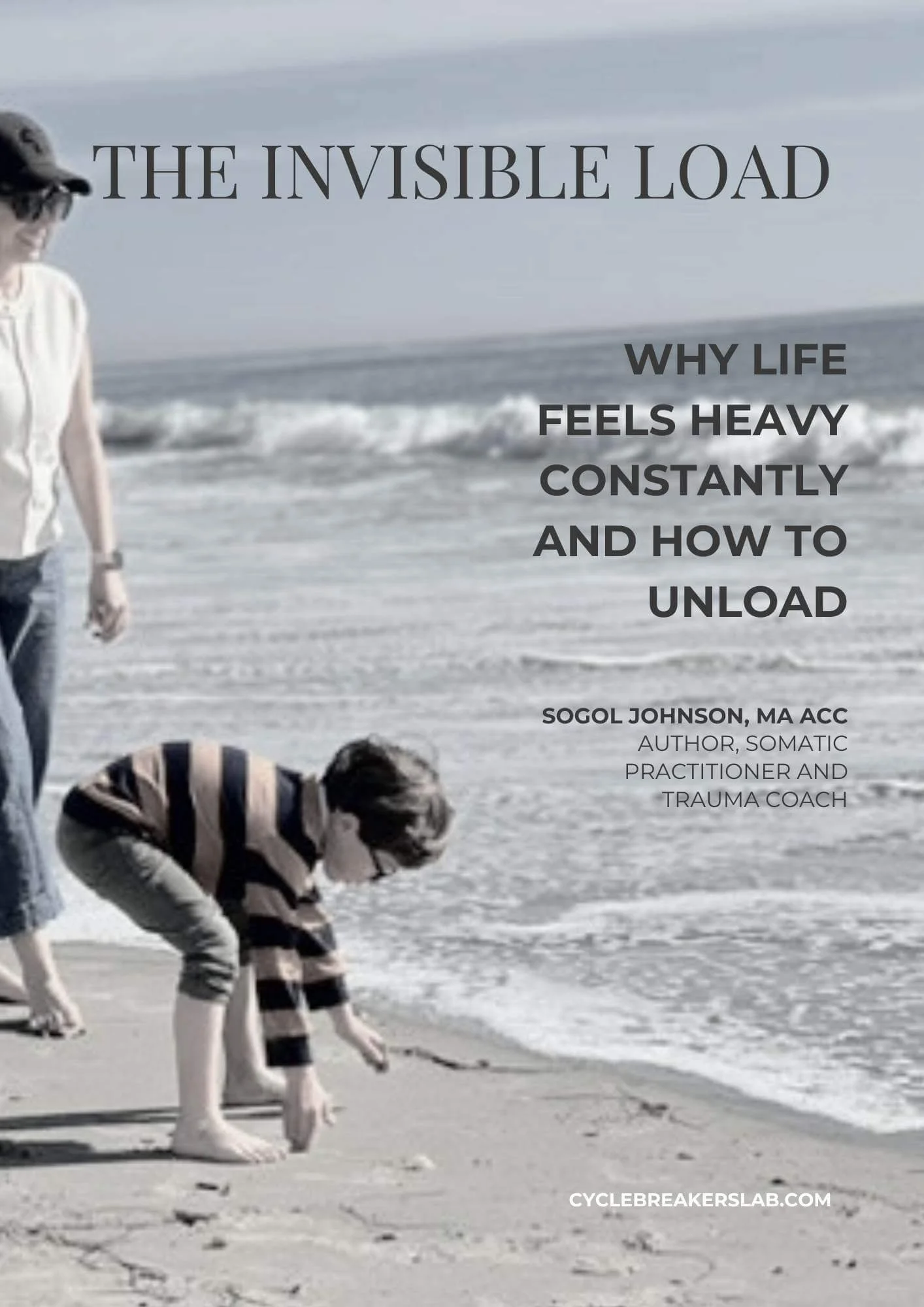
Why Life Feels Heavy Even When We're Doing Everything Right
On paper, our lives look successful.
We show up at work. We meet deadlines. We remember birthdays. Then plan every single event from balloons to venue to invites. We pay the bills. We plan dinner, attend the soccer game, answer emails after the kids are asleep, and somehow keep everything moving.
People describe us as capable.
Reliable.
Successful.
A Warrior (we personally don't love that one)
So why does life still feel so chaotic? Like we are constantly coming up for air and spinning from one thing to another. Is this what success feels like.
It isn't just our calendar or our responsibilities. It's the mental, emotional, and physiological effort required to keep functioning while our nervous system quietly stays on high alert.
It doesn't matter if we are a stay at home parent or a leader at some big corporation, we assume we need better time management, more discipline, or another productivity system.
But what if the issue isn't a lack of discipline at all, but the state of our nervous system?
Polyvagal theory helps us understand that our bodies are constantly scanning for safety or threat, shaping whether we feel calm, connected, shut down, or overwhelmed. When our system is stuck in survival modes, no amount of productivity hacks will create lasting change.
When carrying constant emotional responsibility begins to trigger severe burnout, specialized life transitions coaching helps recalibrate your internal capacity and establish healthy boundaries.
We need to understand what our body has been carrying for years.
Our Body Is Carrying More Than Our To-Do List
We often think stress lives in our minds.
In reality, stress is experienced through the body.
According to somatic experiencing, our nervous system constantly scans for cues of safety or danger. This process happens automatically, long before we're consciously aware of it.
If our body has learned that love had to be earned, mistakes weren't safe, or rest meant falling behind, it doesn't simply forget those lessons because we've become successful.
Humans are highly adaptable beings and so naturally it adapts.
It learns to stay prepared.
Prepared for criticism.
Prepared for disappointment.
Prepared for the next emergency.
Eventually, being busy no longer feels like a choice.
It feels like survival.
The High Cost of Always Being "Fine"
Many of us become experts at appearing calm while carrying an enormous internal load.
We become the dependable employee.
The supportive partner.
The attentive parent.
The person everyone relies on.
I remember Esther Perel saying in one of her interviews on The School of Greatness, "We expect so much from our partners- all of that from one person? Really?" I remember chuckling when I heard her say that, but it's so freakishly true.
Underneath all that is:
Constant muscle tension
Difficulty relaxing on weekends
Feeling guilty when resting
Irritability with the people we love most
Overthinking every decision
Feeling emotionally numb despite accomplishing more than ever
Saying "yes" when every part of us wants to say "no"
These aren't personality flaws.
They're often signs that our nervous system has been working overtime for a very long time.
Parenthood Doesn't Create the Load. It Reveals It.
Becoming a parent doesn't suddenly make us anxious or overwhelmed.
It often exposes patterns that were already there.
Children naturally activate our attachment system. They need us emotionally, physically, and consistently. That responsibility is beautiful, but it also shines a light on the strategies we've used to survive our own childhood experiences.
If we grew up believing our worth came from taking care of everyone else, parenthood can magnify that pattern.
If saying "no" once felt unsafe, we'll likely find ourselves saying "yes" to everyone while quietly abandoning ourselves.
This isn't because we're failing.
It's because our nervous system is repeating what once helped us belong.
What Is Our Body Asking For?
One of the most overlooked leadership skills, parenting skills, and relationship skills is learning to listen to our body before it has to scream.
Throughout the day, pause for a moment and ask ourselves:
What am I feeling right now?
Where do I notice it in my body?
If this sensation could speak, what would it ask for?
Do I truly have the capacity to say yes?
What would change if I honored this feeling instead of pushing through it?
These questions aren't about becoming less productive.
They're about becoming more aware.
Our body communicates through tension, fatigue, headaches, shallow breathing, irritability, and emotional exhaustion long before burnout arrives.
The earlier we listen, the less our body has to fight for our attention.
Learning to Say No Is a Nervous System Skill
Many of us think boundaries are simply about confidence.
Often, they're about safety.
If saying "no" once risked rejection, conflict, or disappointment, our nervous system may still interpret boundaries as dangerous.
That's why saying no can create guilt even when it's the healthiest choice.
Learning to set boundaries isn't just changing behavior.
It's teaching our nervous system that protecting our energy no longer threatens our relationships.
In my practice, I use Somatic IFS & parts work to help clients build relationships with their protective parts and gently access deeper emotional healing.
We Don't Need to Carry It All Alone
The invisible load doesn't disappear because we become stronger.
It becomes lighter because we stop carrying what was never ours to hold in the first place.
Healing isn't about becoming a different person.
It's about helping our nervous system realize that the strategies that protected us years ago may no longer be necessary today.
When our body begins to experience safety, something remarkable happens.
We stop managing life from survival.
We begin living it with intention.
That shift doesn't just change our work.
It changes our relationships.
It changes our parenting.
It changes the legacy our children inherit.
Sometimes the strongest thing we can do isn't pushing harder.
It's finally listening to what our body has been trying to say all along.
About the Author
Sogol Johnson, MA, ACC, is the founder of Cycle Breakers Lab and creator of the Mental Mastery Protocol™, a practical field guide that helps high-functioning professionals and parents understand their nervous system, break survival patterns, and build lasting emotional resilience through evidence-informed practices inspired by somatic experiencing, attachment theory, and nervous system regulation.