
How Unhealed Trauma Passes Down Through Generations
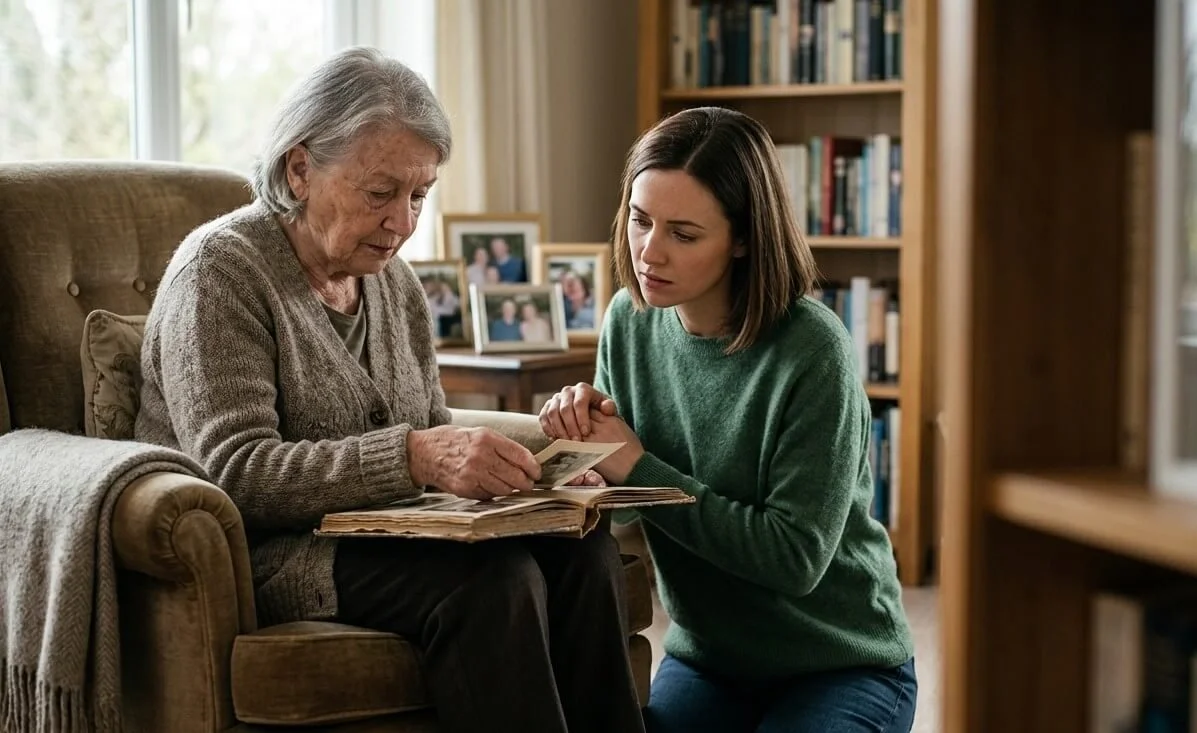
A child does not have to learn everything about a parent's history for it to impact him. They might learn to give in to aggression, to perceive shifts in their own moods, or to think that love comes with performance.
These subconscious patterns are at the very core of The Cycle Breakers Lab, founded by Sogol Johnson. Her somatic and leadership coaching methodology focuses on helping adults who know how to survive on autopilot, but whose nervous systems still react as if they are constantly in danger.
Generational trauma is not an official diagnosis. It refers to how the impact of traumatic events can be passed down and affect children and grandchildren in family relationships, through learned behavior, in the living environment, through stress reactions, and perhaps through biological means as well.
How Does The Unhealed Trauma Pass Down Through Generations
Many people do not experience trauma in just one way. Many influences are frequently compounded.
Learned survival behaviors
Children naturally mirror the adults around them. For instance, a parent who experienced chronic instability in childhood might become hyper-controlling because, in their past, micro-managing everything was the only way to feel safe. Similarly, someone raised in an emotionally distant home might struggle to openly express affection to their own children, even if they love them deeply.
Attachment and emotional communication
If caregivers are struggling with unprocessed fear, grief, or shame, it may be challenging for them to react consistently to a child's feelings. Then the child might learn to numb emotional responses to events, not seek assistance, or closely track others' shifts in mood.
Studying adverse childhood experiences among parents has been correlated with emotional and behavioural outcomes among children, but these connections are not always found, and their strength is inconsistent. Parental mental health, parenting style, and family functioning seem to be significant factors.
Family beliefs and unspoken rules
Trauma may also be passed down via messages like:
“Never trust anyone outside the family.”
“Talking about problems makes us look weak.”
“Your needs come after everyone else’s.”
“Success is the only protection from failure.”
“What happens in this house stays here.”
These rules could have been used at one point to help a family survive. But in a non-safety context, they might cause perfectionism, isolation, people-pleasing or trouble setting boundaries.
Social and environmental conditions
Poverty, discrimination, displacement, community violence, and insecure housing can be passed down from generation to generation. This isn't just the mindset of the individual. They can pass on a prolonged period of stress to multiple generations.
As stated by the CDC, adverse childhood events can impact health, well-being, education, and employment outcomes later in life. It also underscores that safe, stable, nurturing relationships can guard against and help to prevent further adversity.
Possible biological influences
The investigation is ongoing as to whether stress could interact at the epigenomic level and modulate gene activity. There is some evidence of biological effects, but there is no simple “trauma gene,” and results should not be interpreted as proof that a person's life will be inevitably determined. A 2025 systematic review revealed that descendants of those who experienced collective trauma could be psychologically and psychophysiologically impacted, and that more important methodological limitations need to be addressed in further research.
What Breaking the Pattern Looks Like
The first step in healing is seeing, not blaming. The first step is to identify:
The situation that triggers your reaction
The physical sensations that appear
The family rule or fear underneath it
The response you would prefer to practice
For instance, an employee who freezes around authority figures at work is often repeating a childhood survival response. In these cases, Sogol Johnson’s specialized Trauma-Informed Career Coaching can help professionals rebuild their workplace confidence, set professional boundaries, and master high-stakes communication.
Trauma coaching may be used to work on present-level patterns for some adults, but it's not a clinical diagnosis or therapeutic treatment. SAMHSA suggests trauma-informed support that honors safety, trust, collaboration, empowerment, and the prevention of re-traumatization.
Final Thoughts
Understanding how unhealed trauma passes down through generations does not imply assigning permanent guilt to the parent or grandparents. Most families transmit strengths along with the pain.
The aim is to identify which survival strategies you no longer need. One repeated reaction to begin with, curiosity to go with, and one safer response to practice. Patterns that have been in existence for years can only be altered by awareness, support, and repeated action.